Pool Grotto Cost and Design Guide for DFW Backyards
Most people calling us about pool grottos have the same starting problem: their pool has zero shade. By 2 PM on a July afternoon in Plano or Southlake, the water hits 90-plus degrees and the deck concrete is too hot to walk on barefoot. They want to use the pool they already paid for, but the sun makes it miserable from May through September. A grotto solves that — but it's not cheap, it's not simple, and it's not right for every yard.
If you already know you want one, our pool grotto builders page covers how we build grottos with waterfalls and slides, and what each size costs.
DFW Soil, Permits, and the Stuff Nobody Mentions First
Before talking design, talk dirt. Most of the DFW metro sits on expansive clay soil — the kind that swells when wet and shrinks when dry. That seasonal movement puts real stress on any heavy rock structure attached to a pool shell. A grotto that wasn't engineered for clay soil can crack at the bond beam within two or three years. Your builder needs to account for this with proper pier depth and flexible connections between the grotto and the pool structure.
Permits are the other reality check. In cities like Frisco and McKinney, any structural addition to an existing pool requires a building permit, and some HOAs have height restrictions that cap how tall a grotto can be. We've had projects in Allen where the HOA limited rock features to six feet above the waterline, which changes what's possible. Check your CC&Rs before you fall in love with a design you can't build.
What a Pool Grotto Actually Is (and Isn't)
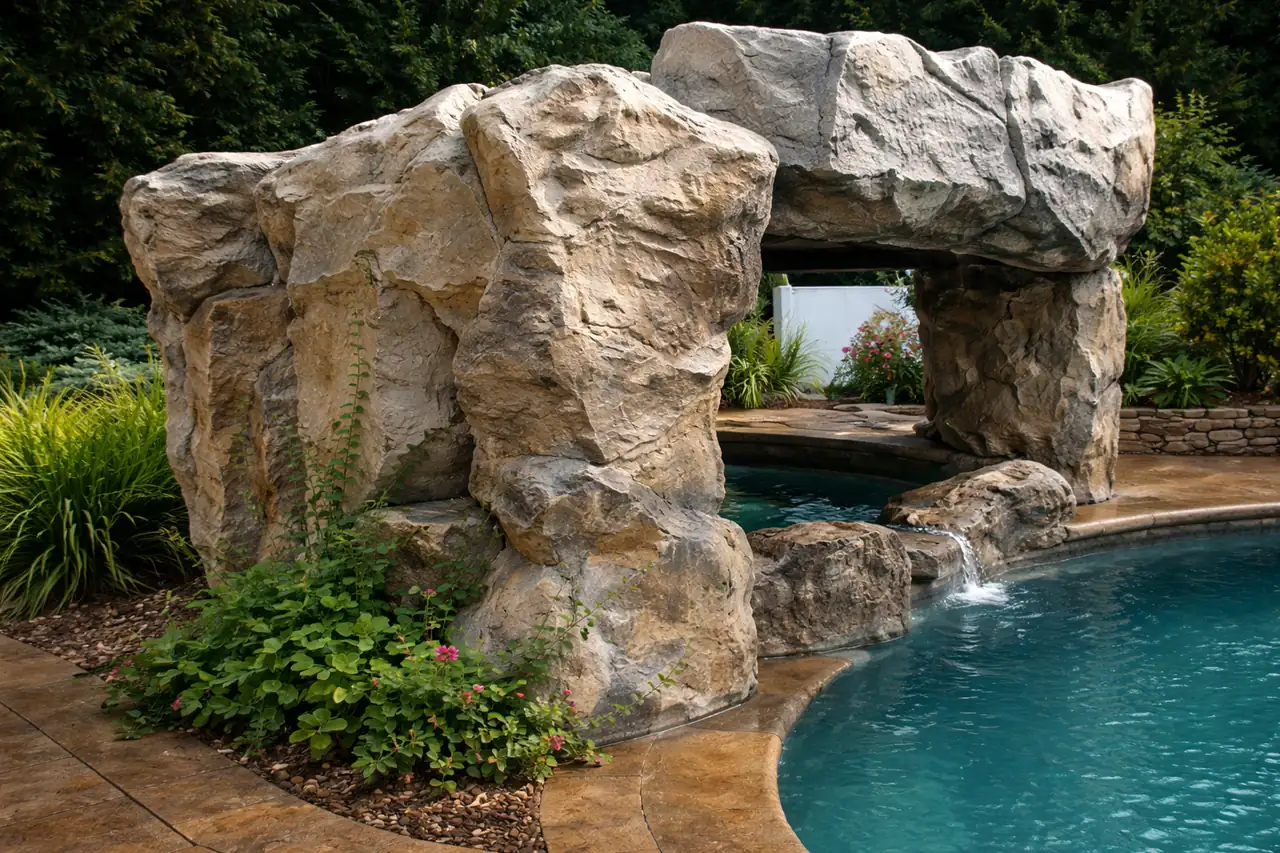
A pool grotto is a cave-like alcove built into a raised rock wall on one side of your pool. Water typically flows over the top as a waterfall, and you swim or wade underneath into a shaded pocket. Most include a built-in bench or ledge so you can sit inside. Some incorporate lighting, speakers, or a bar shelf.
What a grotto is not: a freestanding structure. It has to tie into your pool's edge, which means it needs to be engineered as part of the pool shell or retrofitted with serious structural work. It's also not a pergola or shade sail — the cooling effect comes from the rock mass and water flow, not just blocking sunlight.
How Much Does It Cost to Build a Pool Grotto?
The cost to build a pool grotto in the DFW area runs $15,000-$25,000 for a mid-size grotto: a swim-in cave with a bench, a waterfall across the opening and basic lighting. A larger grotto combined with a carved rock slide and more than one waterfall runs $25,000-$40,000 or more, and that combo is what most of our customers build. Retrofitting onto an older pool costs more than building alongside a new one, because of the structural and engineering work.
These numbers don't include the pump upgrade you'll probably need to run the waterfall, which can be another $1,500-$3,000 for a quality variable-speed unit. And if your existing pool equipment pad needs to be relocated or expanded to accommodate the additional plumbing, budget for that too.
Does a grotto add resale value? Honestly, it depends on the neighborhood. In areas like Westlake, Colleyville, or Prosper where custom pools are expected, a well-built grotto can add meaningful value. In a neighborhood where most pools are basic rectangles, the return is less predictable — some buyers love it, others see it as a maintenance item.
When a Grotto Is NOT the Right Call
Grottos don't fit every situation. Here's when we steer people away from them.
Small pools under 400 square feet of surface area usually can't support a grotto without the structure dominating the whole space. You lose too much usable swim area. A grotto also adds significant weight to one side of the pool, so if your pool was built with minimal reinforcement — common in older budget builds from the early 2000s — retrofitting gets expensive fast. Sometimes the engineering alone costs $3,000 to $5,000 before any rock goes up.
If your main goal is just shade, a well-placed cantilever shade structure or even a mature tree might get you 80% of the benefit at a third of the cost. Be honest about what you're solving for.
Materials That Hold Up in Texas Heat
The rock you choose matters more here than in cooler climates. Texas sun degrades certain sealants and pigments within a few seasons, so material selection has to account for UV exposure, thermal cycling, and pool chemistry.
Natural limestone and sandstone are the traditional choices across DFW. Locally quarried limestone is heavy, durable, and weathers well. It also stays cooler to the touch than darker stone. The downside is weight — a natural stone grotto needs heavier structural support, and the material cost runs higher.
Carved concrete (faux rock) is what most mid-range projects use now. A skilled artisan can shape and color shotcrete to look convincingly like natural rock at roughly 40-60% of the material cost. It's lighter, which reduces structural demands. The tradeoff is longevity of the finish: faux rock in direct Texas sun typically needs resealing every three to five years, and the color may fade unevenly. We wrote a full breakdown comparing concrete pool grottos if you want the details on each approach.
Moss rock and Oklahoma stone show up in some builds. These look great initially but can be harder to maintain — irregular surfaces trap algae, and the porous nature of some fieldstone means more chemical absorption from pool water.
How Waterfall Flow Changes the Experience
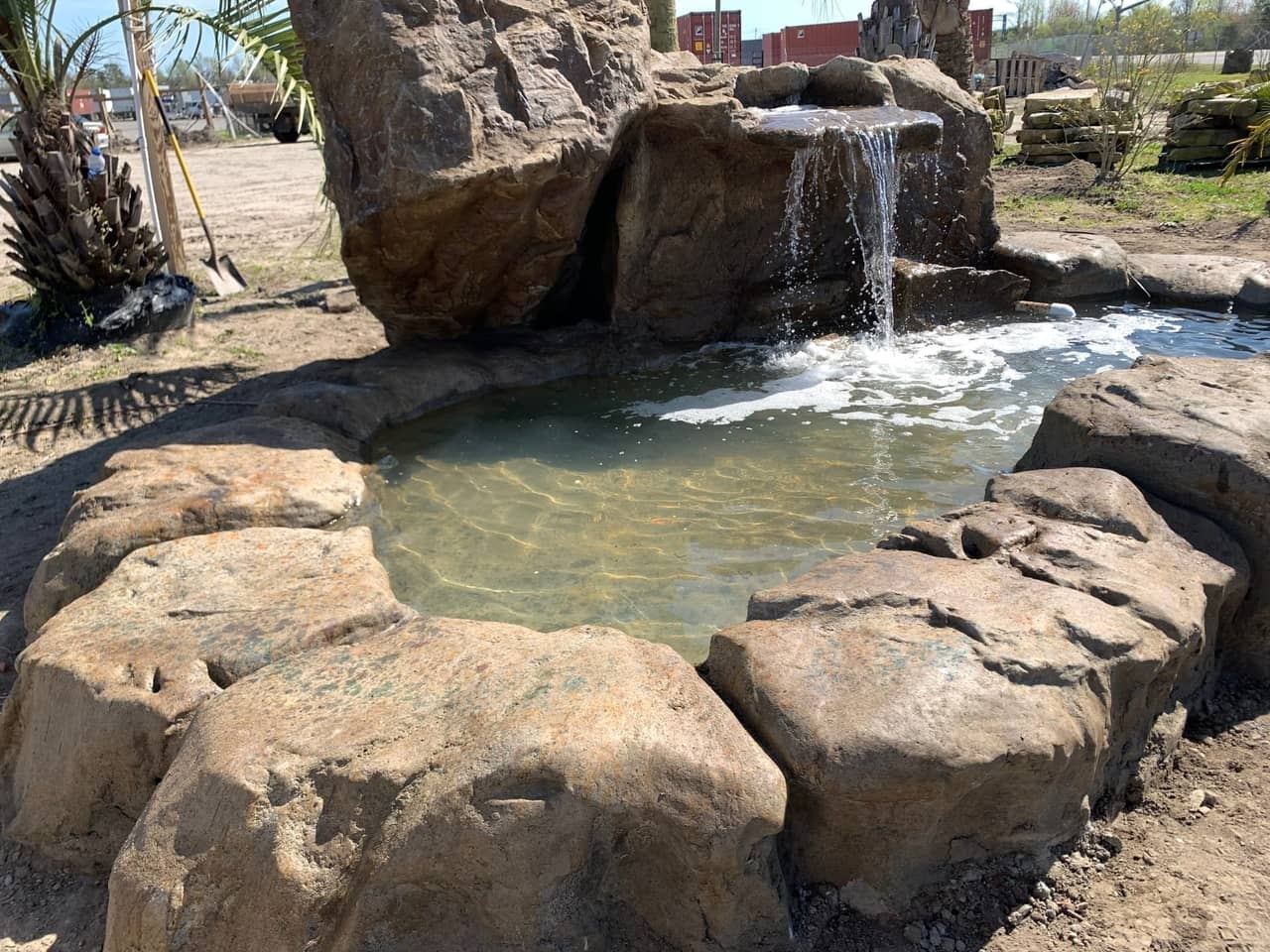
Almost every grotto includes a waterfall. The water sheet across the opening is half the appeal — it creates a visual barrier that makes the space inside feel enclosed and separate from the rest of the pool.
But waterfall design involves real tradeoffs. A heavy flow (say, 80+ gallons per minute) sounds dramatic and cools the air noticeably, but it increases your pump energy costs and creates splash noise that might bother neighbors on tight DFW lots. A gentler curtain flow (20-40 GPM) uses less energy and is quieter, but it won't cool the interior as much on a 105-degree day. We typically spec variable-speed pumps so homeowners can adjust flow based on the season.
Water chemistry matters too. The constant aeration from a waterfall raises your pool's pH over time, which means more acid additions. If you already struggle to keep your water balanced, adding a high-flow waterfall to a grotto will make that harder. It's manageable, but it's a maintenance reality you should know about upfront. For more on how carved concrete waterfalls integrate with grotto builds, we've covered the construction details separately.
Lighting and Electrical Inside the Grotto
A grotto without lighting is a dark hole after sunset. Good lighting makes it usable at night and adds a lot to how the whole pool looks from the house.
LED strips along the ceiling of the grotto interior, set to a warm white, give the cave effect without being harsh. Underwater lights at the grotto entrance highlight the waterfall from behind. Color-changing LEDs are popular, though in our experience most homeowners settle on one or two colors after the novelty wears off.
All electrical work inside a grotto needs to be GFCI-protected and built to code for wet locations. In Tarrant and Collin counties, this means a separate inspection, and the wiring has to be run before the rock work goes up. Trying to add electrical after the fact means chipping into finished rock, which is expensive and never looks as clean.
Scale: Matching the Grotto to Your Pool and Yard
The most common design mistake is building a grotto that's too big or too small for the pool. A rough guideline: the grotto footprint should occupy no more than 15-20% of the pool's total surface area. On a typical 600-square-foot DFW residential pool, that means a grotto opening of roughly 5-6 feet wide and 4-5 feet deep (the interior cave space).
Height matters for both aesthetics and regulations. Most residential grottos sit 6-8 feet above the waterline at the peak. Go taller and you start needing wind-load engineering, which adds cost. The grotto should also relate to the rest of your hardscape — if you have a low, clean-lined patio, a massive rock feature can look out of place. We often build grottos as part of a larger raised rock wall that also includes planters or a spillway, so the feature blends into the overall landscape rather than sitting there like a boulder dropped from space.
Ongoing Maintenance You Should Plan For
Grottos require more upkeep than a flat pool deck. The interior ceiling collects moisture and is prone to algae or mineral deposits, especially in DFW's hard water. You'll need to scrub the interior rock surfaces a few times per season. Faux rock needs resealing on a cycle — skip it and the color fades noticeably.
The waterfall plumbing should be inspected annually. Calcium buildup at the weir (the lip where water spills over) is common and can redirect water flow in ways that look sloppy or cause erosion on the rock face below. A yearly cleaning and descaling keeps things running right.
If you have lighting inside the grotto, LED fixtures in wet environments have a lifespan of about 5-7 years before they start failing. Plan for replacement. The good news is that LED swap-outs are straightforward if the original wiring was done properly.
How to Find the Right Builder
Not every pool contractor has grotto experience. Rock work — whether natural stone or carved concrete — is a specialized skill. Ask to see finished projects in person, not just photos. Photos don't show whether seams are tight, whether the color is consistent, or whether the structure has settled.
Look specifically for builders who have worked in DFW's clay soil conditions and who pull their own permits. At Texas Stone Craft, we handle custom water features including grottos, and we're happy to walk you through past projects. Our case studies show the range of what's possible, and our gallery has photos from local builds.
Ask any builder these questions: What foundation system do you use on clay soil? How do you handle the bond between the grotto and the pool shell? What's your warranty on the rock finish? What pump specs are you recommending, and why? The answers will tell you quickly whether they've done this before or are figuring it out on your job.
Worth Reading Before You Decide
If you're weighing options, a few other pieces on our site might help. Our post on outdoor living design covers how pool features fit into a larger backyard plan. And if you're comparing grotto materials specifically, the concrete pool grottos breakdown goes deep on durability, cost, and appearance differences.
Next Steps If You're Serious
If you've read this far, you're probably past the "just browsing" stage. The best way to figure out whether a grotto works for your specific pool, yard, and budget is a site visit — we need to see the pool shell, check the soil, and measure the space before we can give you a real number. Reach out to us here and we'll set up a time to look at your yard. You can also browse our full list of services or read what past clients have said on our testimonials page.
Last updated: