Carved Concrete Waterfalls: Bringing Nature to Your DFW Backyard
Carved Concrete Waterfalls: Bringing Nature to Your DFW Backyard, Without the Real Stone Hassle
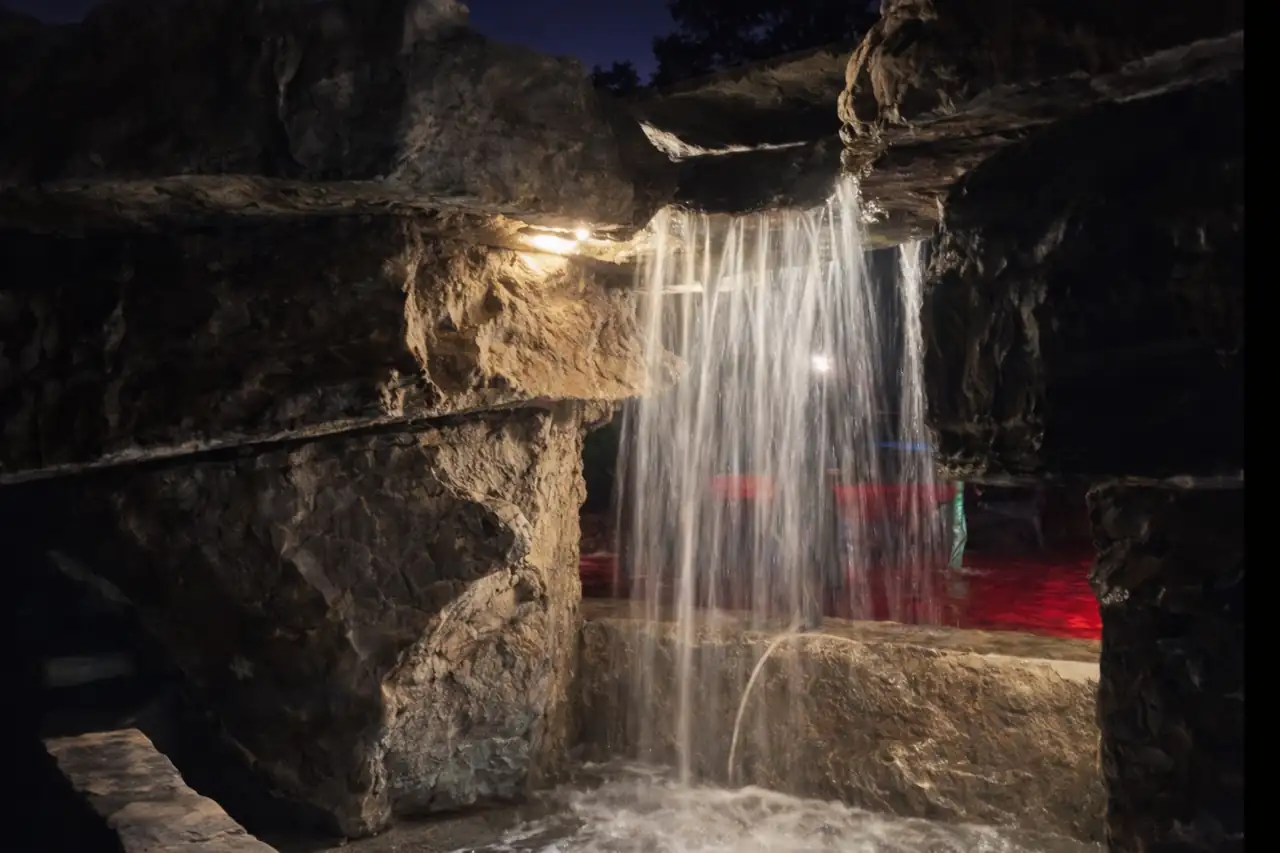
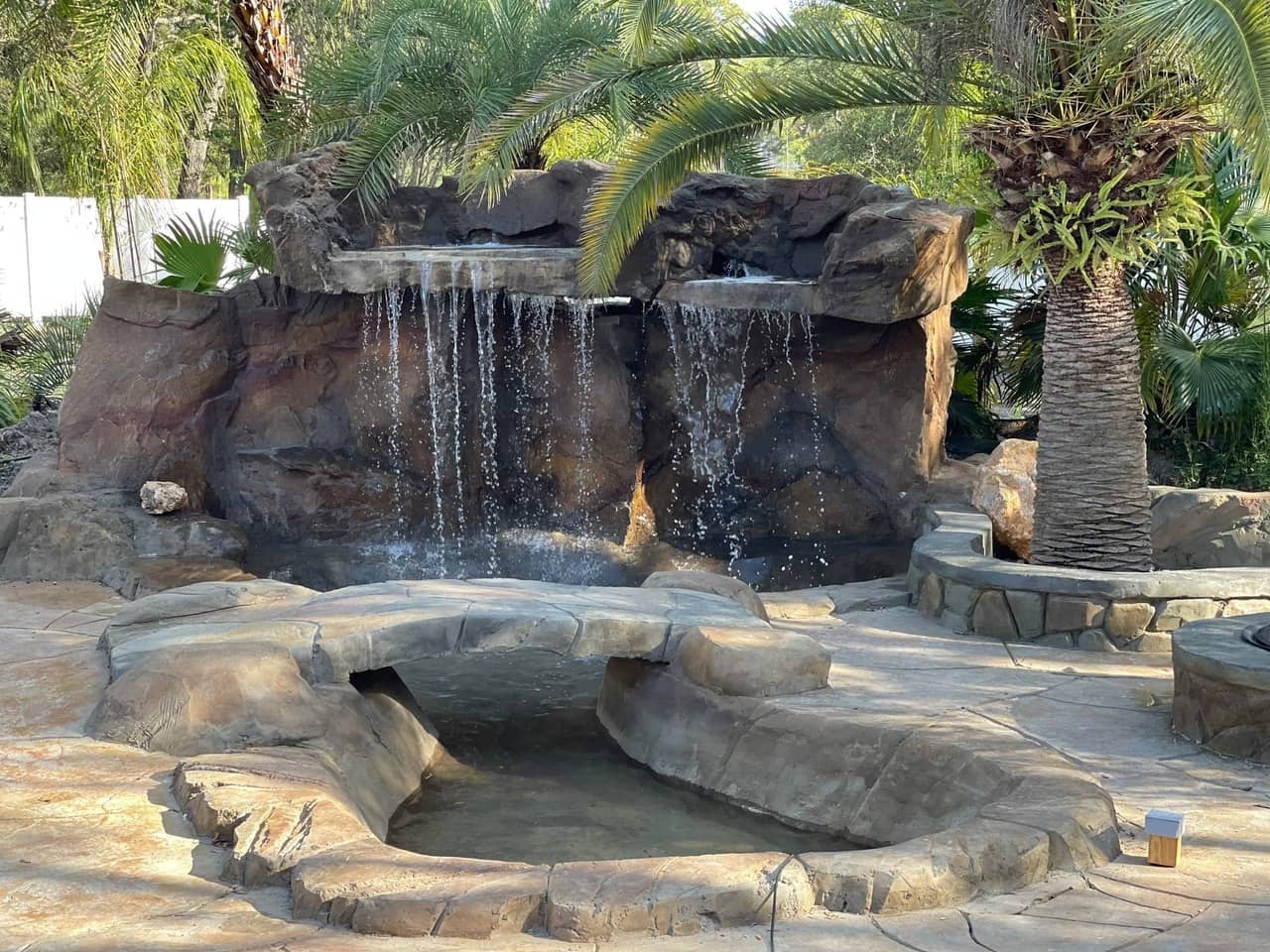
A carved concrete waterfall gives a Dallas-Fort Worth backyard the look and sound of a rock cascade without hauling in boulders. We build the rock faces from concrete and GFRC (Glass Fiber Reinforced Concrete), then carve and color them by hand on site. The finished piece reads as weathered limestone or mossy creek rock. Underneath, it is a reinforced concrete structure with a sealed basin, a pump and plumbing we can get to.
This post covers how we build one, what drives the price, how it holds up through a North Texas summer and a hard freeze, and what to ask before you hire anyone to put water in your yard.
Why Build a Waterfall From Carved Concrete?
Most backyard waterfalls in DFW get built one of three ways. Stacked boulders, prefab rock panels bolted together, or carved concrete. We only do the third, and the reasons are practical.
- Weight. Real boulders big enough to look right weigh tons. They need equipment access, and on our expansive clay they need a footing that will not tilt when the ground swells. A carved shell over a reinforced core puts far less load on the soil.
- Shape control. With boulders you build around whatever rocks showed up on the truck. With carved concrete we shape the ledges, lips and spill points to the flow we want. The water goes where it was drawn.
- No repeating patterns. Prefab panels come out of molds, and after a few feet you start to see the same crack twice. We carve every face by hand, so nothing repeats.
- Cost. By our pricing, carved concrete and GFRC run 40-60% less than building the same feature from installed natural stone.
- Sealed surfaces. Stacked stone leaves gaps that leak and collect debris. A carved waterfall is one continuous surface over a waterproofed basin, so the water stays in the system.
What Does a Carved Concrete Waterfall Cost in DFW?
Our published range for water features runs from about $5,000 to $40,000 and up. Where a project lands depends on four things.
| Feature | Typical range | Time on site |
|---|---|---|
| Pondless waterfall | From about $5,000 | 7-10 days |
| Pool waterfall or grotto | $15,000-$30,000 typical | 7-10 days or more |
| Large carved grotto | $40,000+ | 7-10 days or more |
Height and width. A 3-foot spill off a planter wall needs a small structure and one pump. A 6-foot cascade needs a deeper footing, more reinforcement, a bigger pump and a lot more carving hours.
Carving detail. Carving is labor. A smooth ledge with a few fracture lines goes fast. Deep undercuts, layered strata and moss pockets take days.
Plumbing and electrical. The pump, the supply line, a dedicated circuit and any lighting all add cost. So does a long run from the equipment pad. Pool-connected waterfalls tie into the existing circulation, which can save a separate pump but needs coordination with your pool equipment.
Access. A backyard we can reach with a skid steer and a concrete line costs less to build than one where every bag and bucket goes through a side gate by hand.
For a broader look at pricing across ponds, fountains and grottos, read our DFW water feature cost guide.
How We Build a Carved Waterfall, Step by Step
1. Layout and water path
We start with the sound and the sight line. Where do you sit? Where does the water need to be loud, and where should it stay quiet enough to talk over? We mark the footprint, the spill points and the basin, then check the grade so runoff from the yard does not flow into the feature.
2. Excavation and footing
We dig the basin and the footing. On DFW clay the footing matters more than anything you will see later. Clay swells when it gets wet and shrinks when it dries out, and a waterfall sits right where the ground stays wettest. We compact the base and reinforce the footing with steel so the structure moves as one piece if the soil moves.
3. Structural core
The core is the skeleton: rebar standing up out of the footing, with carving mix stacked onto the steel by hand to the rough shape of the rock. This is where the ledges get their depth and the spill points get their pitch. A lip that tilts a quarter inch the wrong way sends water down the back of the rock instead of over the front.
4. Waterproofing and plumbing
The basin and every surface that holds water get waterproofed before any carving happens. The supply line runs up inside the structure to the top spill. Lighting conduit goes in at the same time, so no wire shows when we are done.
5. Carving
We apply the carving coat, concrete or GFRC depending on the feature, and carve it while it is still green. That is the window when the material holds a sharp edge but still cuts. We use trowels, rakes, brushes and hand-shaped tools to cut fracture lines, bedding planes, weathered edges and pitting. Every face is done freehand.
6. Color
Color goes on in layers. A base tone, then darker washes that settle into the cracks and low spots, then lighter dry-brushed highlights on the edges where real rock would bleach in the sun. Wet surfaces read darker, so we check color with the water running before we call it done.
7. Seal, fill and tune
We seal the rock faces, fill the system and run it. Then we tune it. A few adjustments to flow and lip shape change a waterfall from a roar to a steady sheet. On pool features the variable-speed pump lets you turn it up for a party and down for a quiet evening.
Pondless, Pond or Pool: Which Waterfall Fits Your Yard?
Pondless waterfall. The water falls into a gravel-covered reservoir below grade and recirculates. You get the sound and the moving water without open standing water. That makes it a good fit for small yards, families with young kids and anyone who does not want to manage a pond. Read more in our pondless waterfall guide.
Waterfall into a pond. The water drops into an open pond that can hold plants and fish. It is more work: filtration, water testing and seasonal care. If fish are the goal, see our koi pond construction guide.
Waterfall into a pool. The most common request we get. The waterfall sits at the pool edge and draws from the pool's own water. It can be a single spill, a multi-tier cascade or a full grotto you can swim behind. Our pool grotto guide covers the cave-style builds.
A Real Build: The Frisco Pool Waterfall
One of our published projects shows how this plays out on an existing pool. In Frisco we built a three-tier hand-carved GFRC cascade that drops about 5 feet from a planted berm into the pool's shallow end. The pool shell and deck could not be touched, so the structure sits on its own reinforced pad beside the pool with the bottom tier cantilevered over the wall. The soil there is expansive clay, so the pad sits on drilled piers. The HOA required elevation drawings and material samples before approval.
It took 12 days from foundation pour to first water, plus two days for lighting and landscaping. The full write-up is in our Frisco waterfall case study.
How Carved Waterfalls Handle Texas Heat and Freezes
North Texas throws both extremes at a water feature.
Summer. Long stretches of triple-digit heat bake exposed surfaces and pull water out of the system fast. Recirculating features start with roughly 50-100 gallons and after that you only replace what evaporates. Most add $5-15 a month to a Texas water bill. We use UV-stable stains and a sealer rated for exterior exposure so the color holds. Plan to top off more often in July and August, and keep an eye on the reservoir level so the pump never runs dry.
Winter. The National Weather Service in Fort Worth puts the average first freeze at DFW around November 22 and the average last freeze around March 12. Most winters bring a handful of hard freezes rather than a long cold season. Moving water resists freezing, so in a normal cold snap you leave the pump running. For an extended hard freeze, we walk every owner through shutting down and protecting the pump and exposed lines. The carved shell itself is sealed concrete, and keeping water out of the surface is what protects it through freeze-thaw cycles. That is why the sealer schedule matters.
Clay soil. Wet-dry cycles move the ground under every structure in DFW. The footing and the reinforcement handle that movement. A waterfall built on a thin pad over loose fill will crack, whatever it is made of.
Where to Put a Waterfall in Your Outdoor Space
A waterfall works best when it ties into something you already use.
- Beside a patio. Put it where you sit, not across the yard. The sound should be a few steps away. We often carve the waterfall and a hand-carved concrete patio in matching tones so the rock and the floor read as one design.
- Behind an outdoor kitchen. A waterfall wall behind a grill station gives the cook a view and covers street noise.
- With a fire feature. Fire bowls on the top ledge of a waterfall, or a fire pit near a stream, are a common combination. The gas and water lines get planned together from the start.
- At the pool. Start with where swimmers enter and where the shade falls in the afternoon. A spill that lands in the deep end sounds different from one that lands on a shelf.
For planning more than one of these at once, see our outdoor living services.
Maintenance: What You Will Do and What We Do
A carved waterfall needs a little attention through the year.
Weekly in season. Check the water level. Pull leaves off the top ledge and out of the skimmer or pump vault.
Every few months. Clean the pump intake and check the flow. When a waterfall slows down, check the intake first.
Once a year. Inspect the pump, clean the impeller and look over the lighting. Check the sealer. When water stops beading on the rock, it is getting close.
Every 3-5 years. Reseal the carved surfaces. We clean the rock, touch up any color that has faded in full sun, and apply fresh sealer. Natural stone features typically need attention every year.
Algae is normal on wet surfaces in Texas sun. A soft brush handles most of it. Avoid pressure washing at close range, because it can cut into the carved texture and the sealer.
Questions to Ask Before You Hire a Waterfall Contractor
- Who carves the rock? Ask whether it is carved on site by hand or assembled from molded panels. Ask to see close-up photos of finished work, wet and dry.
- What is under it? Ask about the footing and reinforcement on clay soil. A good answer is specific.
- How is the basin waterproofed? Leaks are the most common failure in backyard water features. Ask how they test for them before handover.
- Who handles plumbing, electrical and permits? Most pondless waterfalls and fountains do not need a permit, but larger ponds, pool tie-ins and new circuits often do. Your city and HOA decide. We handle the permits and HOA packages for our jobs.
- What is the warranty? Ours is a 5-year workmanship warranty. Ask what the pump manufacturer covers as well.
- How do I winterize it? If the answer is vague, keep looking.
Is a Carved Concrete Waterfall Right for You?
If you want the sound of moving water, a rock face that looks like it belongs in your yard, and a structure built for clay soil and Texas weather, carved concrete is a good fit. If you want a living pond full of fish and plants, plan for more ongoing care whatever the rock is made of.
See our water features service page for the full range of what we build, or contact us to set up a free design consultation. We will walk the yard, talk through where the water should go, and give you a written price.
Last updated: